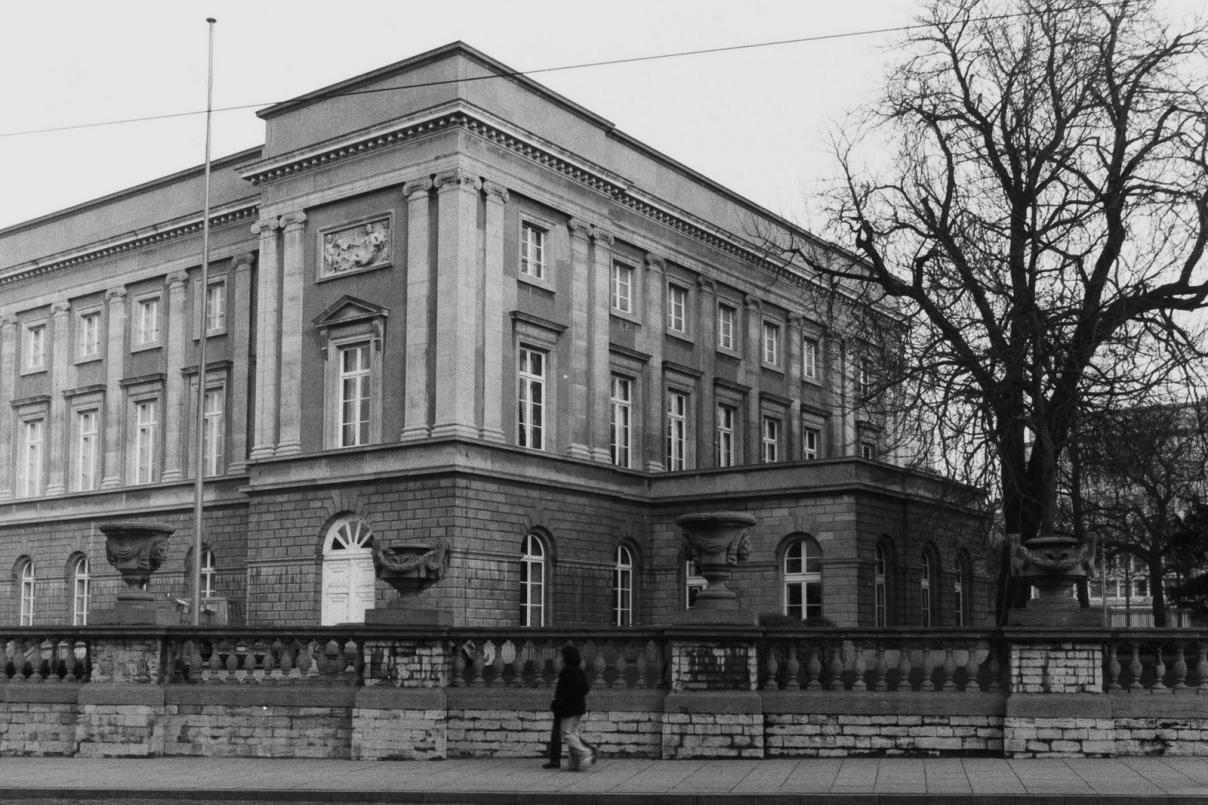
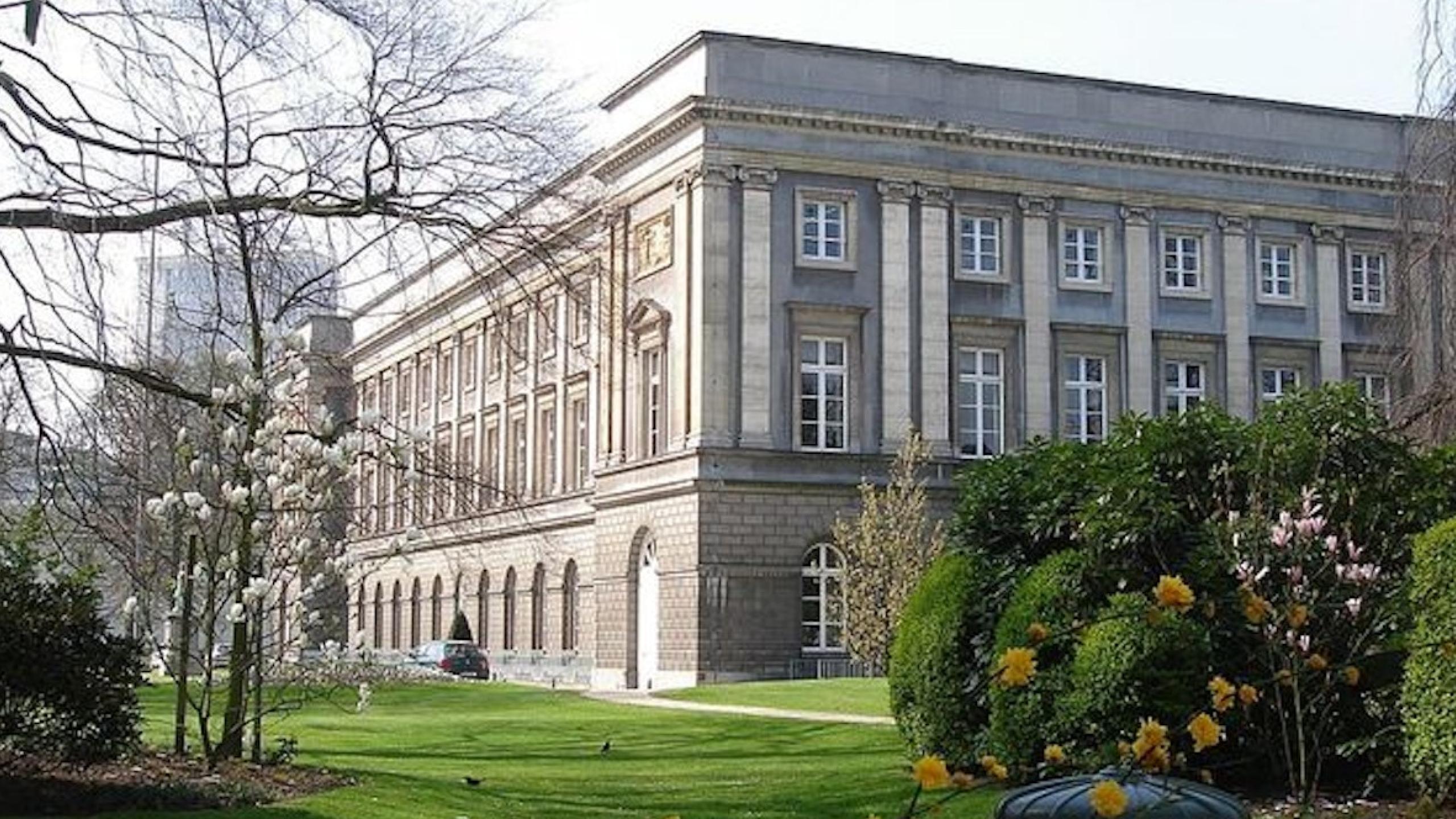
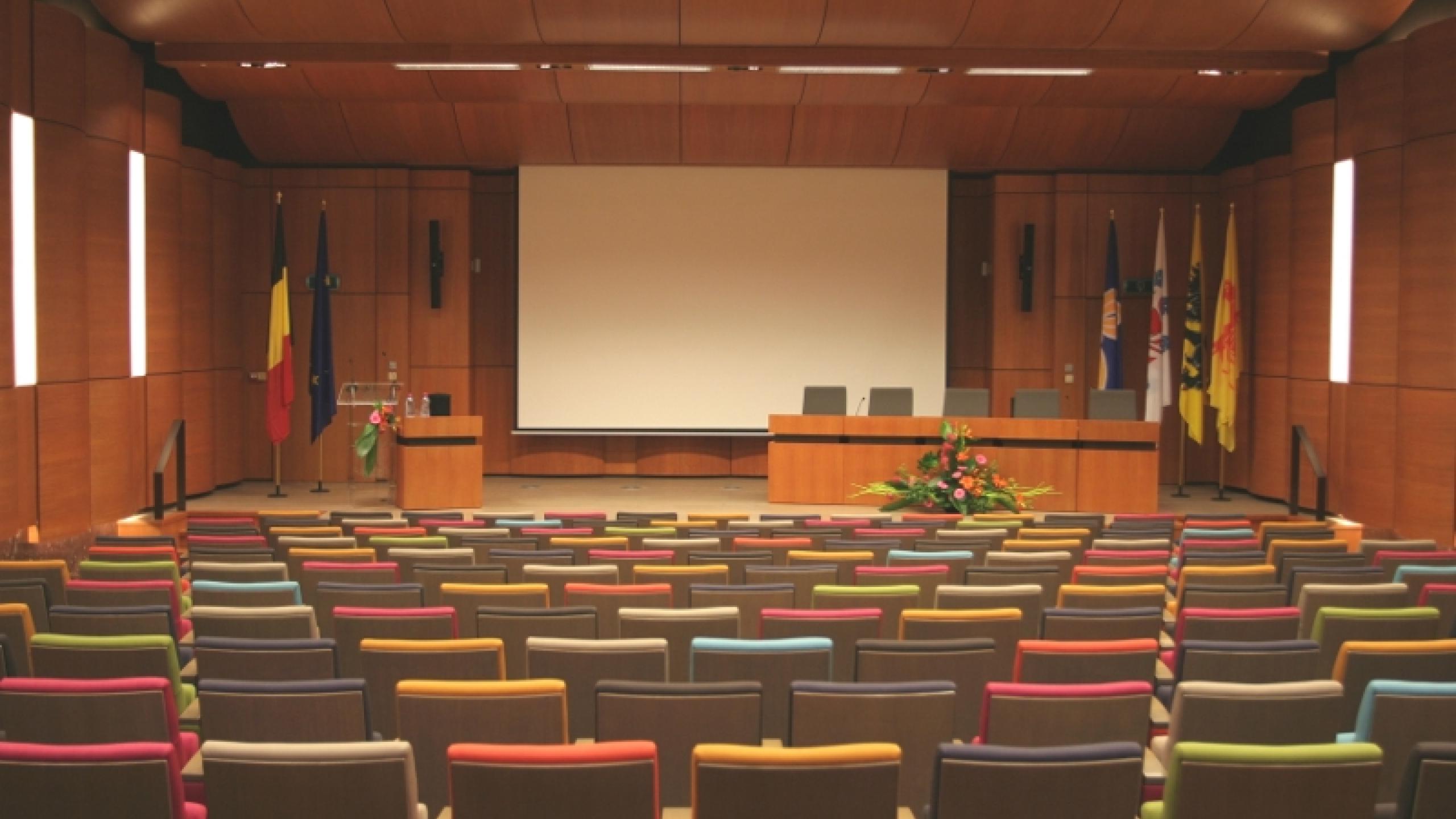
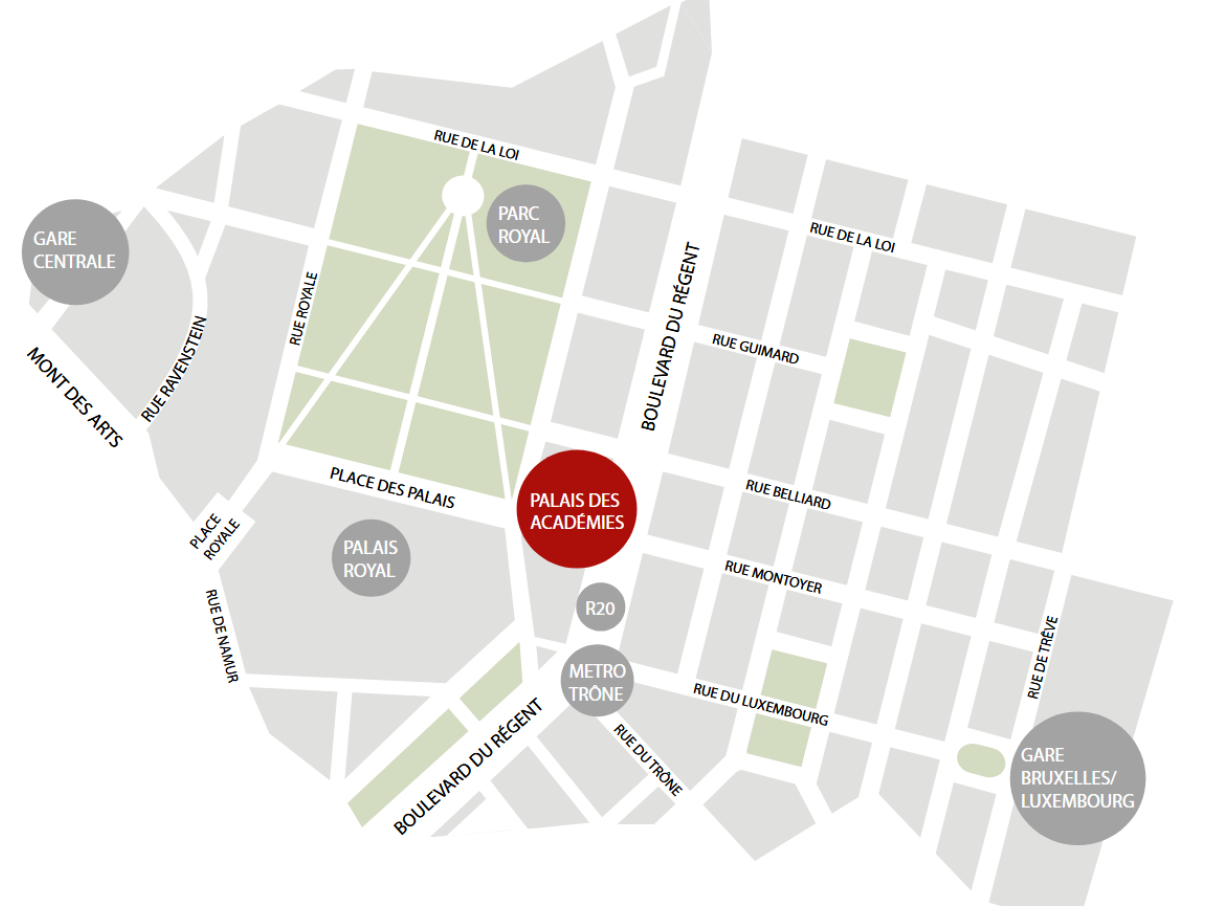
Formerly the palace of the Prince of Orange and currently home to five of the seven Belgian academies, this monumental neoclassical building is located in the center of the block between Rue Ducale and Rue Lambermont, Boulevard du Régent and Place du Trône. It is surrounded by gardens, enclosed, to the west towards Rue Ducale, by a wall, to the north and east towards Rue Lambermont and Boulevard du Régent, by a gate, to the south, towards Place du Trône, by the former outbuildings, riding school, greenhouses, stables and semi-circular service building.
The structure's design was left to architect Charles Vander Straeten, who drew influence from French architect Jean-Nicolas-Louis Durand's ideas, which praised the use of a very basic Neoclassical style. In fact, this structure is a wonderful illustration of this purist design because of its rigid symmetry, subtle façade relief, harmonic order, and exquisite three-toned materials.
Following a 12-year period of sequestration, the palace was eventually acquired by the state, which made the decision to present it to the future King Léopold II in 1853. The king, however, never resided there. The location is converted into a museum of modern art in 1862.
Ultimately, another project was chosen, and the renovated building housed the collections of the Museum of Modern Art before becoming, in 1876, the seat of the Royal Academy of Sciences, Letters, and Fine Arts of Belgium and the Royal Academy of Medicine, taking on the name Palace of the Academies.Other academies later established themselves there: the Royal Academy of French Language and Literature founded in 1920, the Royal Flemish Academy of Belgium for Science and the Arts, and the Royal Academy of Medicine of Belgium, both created in 1938.